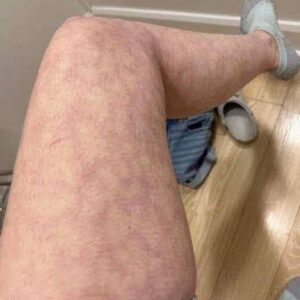
For Annie Windley, a young woman from Derbyshire, England, an eating disorder became something that affected far more than meals. According to the supplied account, years of severe restriction damaged her health, strained relationships and narrowed her daily life around food and fear.
The headline focuses on how little she reportedly ate. But that detail cannot capture the full experience of being seriously unwell. Behind it was a person whose life had become increasingly difficult, with consequences that reached well beyond her appearance.
Annie’s story is presented as one of recovery, although the excerpt does not explain her treatment or establish where she is today. Those missing details matter. Recovery deserves to be understood through the support and care involved, rather than reduced to a dramatic transformation or an act of willpower.
Her reason for sharing, according to the account, is to reach people who are struggling in silence. Someone can need help long before their distress becomes visible to others. You do not have to resemble a photograph or reach a particular weight for your difficulties with eating to deserve attention.
If this story feels familiar, telling someone you trust or contacting a qualified healthcare professional can be a first step. You deserve support without having to prove that things are “bad enough.” The hopeful part of a recovery story is the possibility of reclaiming a life that illness has crowded out.