
The morning sun stretched across the quiet streets of Millfield Heights as Detective Sarah Martinez arrived at the Henderson home, the fourth burglary scene in just three weeks. The neighborhood had once been known for unlocked gates, friendly neighbors, and quiet evenings, but fear had started to settle over every street. Inside the Hendersons’ house, drawers were emptied, valuables were missing, and the back door had been smashed open. What disturbed investigators most was not only the crime itself, but the careless confidence behind it. Whoever had done this did not seem afraid of being caught.
Within hours, fingerprints found on a jewelry box led police to seventeen-year-old Marcus Chen, a local high school junior who was already familiar to law enforcement. Months earlier, he had been caught shoplifting expensive headphones from an electronics store, then later connected to vehicle break-ins around nearby neighborhoods. Each time, Marcus treated the situation like a joke. He laughed at store employees, dismissed stolen property as “just browsing,” and showed almost no remorse. But through every arrest, his mother, Linda Chen, continued standing beside him.
Linda had spent years trying to save her son. As a single mother and a research coordinator for a pharmaceutical company, she worked long hours while also paying for counseling, therapy, intervention programs, and behavioral specialists. She believed Marcus was misunderstood, hurt, or simply lost. When neighbors warned her, she defended him. When school officials said his behavior was getting worse, she made excuses. Linda loved her son deeply, but she slowly began confusing love with protection from consequences.
That changed when Marcus appeared in court for the burglaries. The courtroom was packed with frightened neighbors and victims who wanted answers. When the judge asked Marcus if he understood the seriousness of breaking into people’s homes, Marcus smirked and said people were acting like he had hurt someone. The room went silent. Then Linda stood up. With tears in her eyes, she told the judge she had defended Marcus for too long. She said she loved her son, but she would no longer excuse his behavior. Then she asked the court to hold him accountable before it was too late.
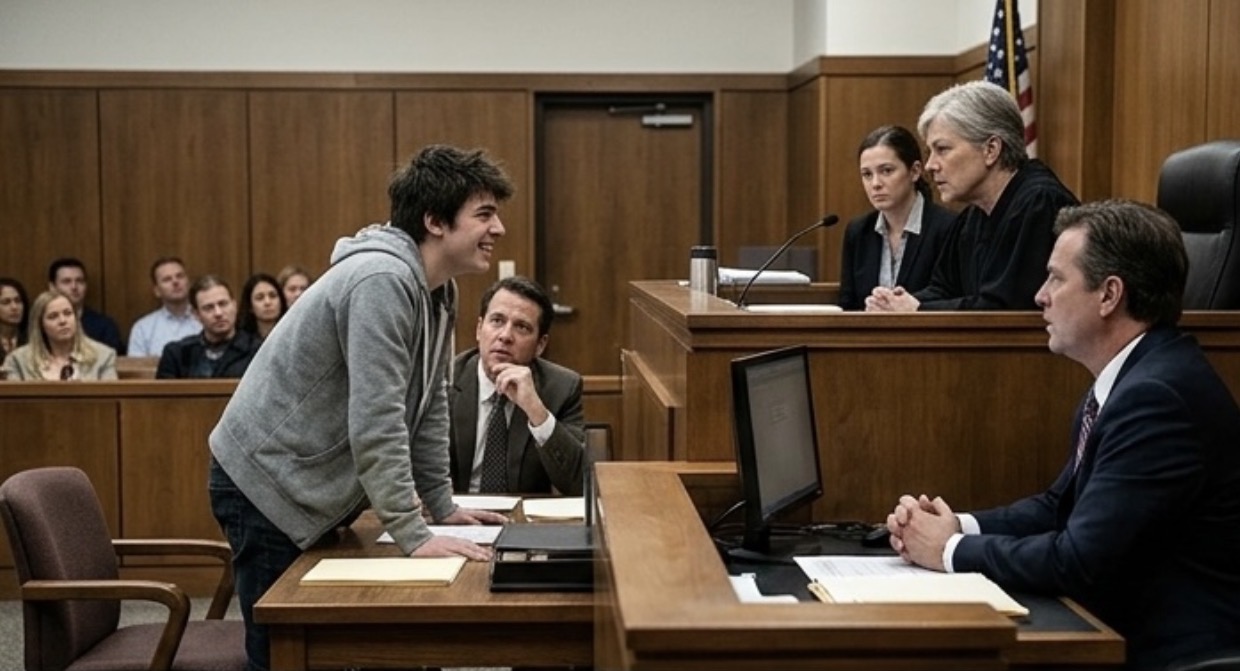
For the first time, Marcus did not laugh. The judge ordered him into a strict juvenile rehabilitation program with restitution, counseling, community service, and court supervision. As Marcus was led away, he looked back at his mother without the smug expression he had worn all morning. Months later, he began writing apology letters to the families he had hurt. His first letter to Linda was short, but it said everything: he had hated her that day in court, but now understood she was the only person brave enough to tell him the truth. Sometimes, love does not mean saving someone from consequences. Sometimes, love means standing up and finally saying, enough.